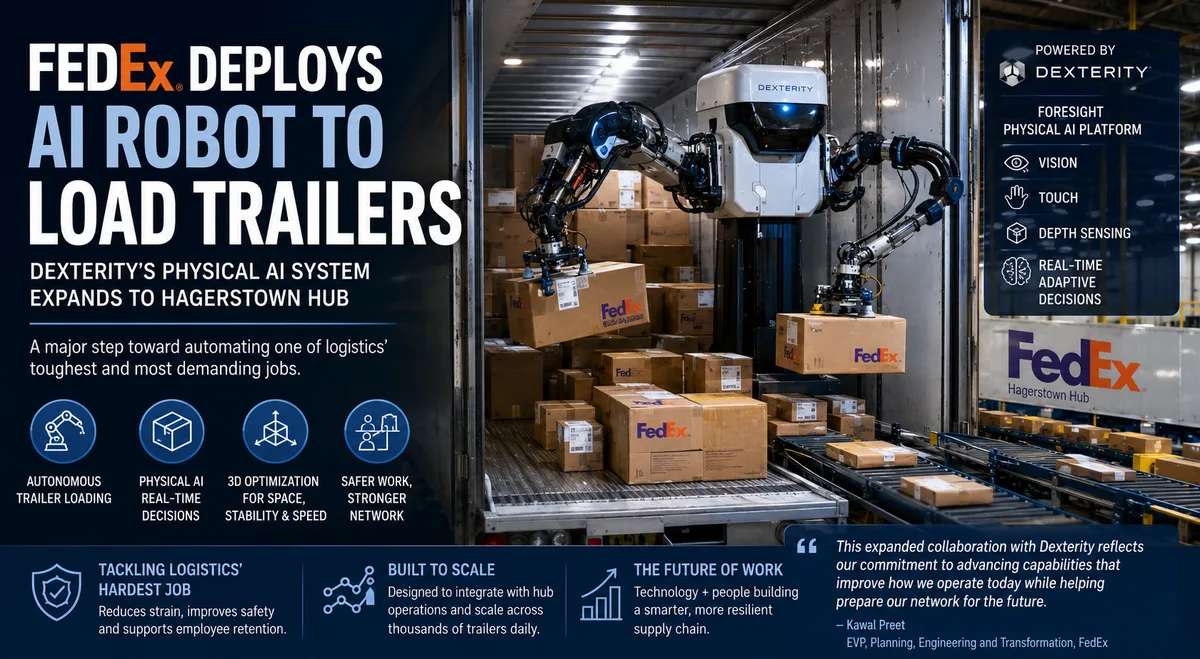
Trailer loading is one of the most physically demanding jobs in logistics. Workers stack hundreds of packages into trailers — often in tight spaces, under time pressure, lifting irregularly shaped boxes for hours at a time. It is also one of the highest-turnover roles in the parcel industry. FedEx loads tens of thousands of trailers every day across its US network. And as of July 30, 2026, it is doing part of that work with a robot.
FedEx and Dexterity — an enterprise physical AI company based in Redwood City, California — announced an expanded deployment of Dexterity's autonomous trailer loading system at the FedEx Hagerstown Hub in Maryland. The announcement follows years of joint development, testing, and operational validation at an earlier pilot site. The Hagerstown deployment moves the program from pilot to production at a significantly larger operational scale — and FedEx has already signalled plans to scale the technology to additional hubs across its network.
What the Robot Actually Does
The system combines Dexterity's Foresight physical AI platform with its dual-armed Mech robot. The technology uses vision, depth sensing and touch to make real-time decisions while loading trailers. In practice, this means the robot receives a continuous stream of packages from the hub's sortation system, assesses each package's dimensions, weight distribution, and fragility in real time, and places it inside the trailer in a configuration optimised for space utilisation, structural stability, and handling speed — across three spatial dimensions simultaneously.
Designed with a compact operational footprint, Mech is agile enough to manoeuvre effectively inside standard commercial trailers. That compactness matters: previous generations of trailer-loading automation required either specially designed trailers or bulky equipment that couldn't fit inside standard commercial vehicles. Dexterity's Foresight world model predicts how physical AI actions impact the world — meaning the robot doesn't just follow a script for where to place each box. It reasons about the consequences of each placement decision before making it, the same way an experienced human loader would anticipate how a stack will behave under transit vibration.
FedEx EVP of Planning, Engineering and Transformation Kawal Preet described the commercial logic directly: "FedEx has a long history of using technology to make our network safer, smarter, and more resilient. This expanded collaboration with Dexterity reflects our commitment to advancing capabilities that improve how we operate today while helping prepare our network for the future."
Why Trailer Loading Specifically — The Problem Nobody Solved for Decades
The advent of physical AI has brought the technology closer to commercial reality — but it took a long time to get here. Trailer loading is one of the few warehouse tasks that has resisted automation for decades, for reasons that are genuinely difficult: the packages vary enormously in size, shape, weight, and fragility. The space inside a trailer changes with every package placed. The sequence in which packages arrive from the sortation belt is not always predictable. And the physical constraints of working inside a trailer — limited headroom, no turning radius, packages arriving from a single direction — make it one of the hardest environments for robotic systems to navigate.
Previous robotic systems could handle structured, repetitive warehouse tasks well — picking identical items from shelves, for example, or moving pallets of uniform boxes. Trailer loading defeated them because it required the same kind of real-time spatial reasoning and adaptive decision-making that human loaders apply intuitively. Foresight predicts how physical AI actions impact the world — in autonomous trailer loading, it reasons across three spatial dimensions and time to optimize how packages are placed for space, stability, and speed across a wide range of operating conditions. That capability — reasoning about physics in real time — is what physical AI adds that rule-based robotics could not.
The Scale Ambition — Tens of Thousands of Trailers Daily
FedEx said trailer loading remains one of the most physically demanding and challenging workflows in parcel logistics, but has historically been difficult to automate using traditional solutions. Through its collaboration with Dexterity, FedEx is establishing not only how physical AI performs in trailer loading operations, but also how the technology integrates into broader hub operations, including destination planning, trailer assignment, maintenance, and workforce processes.
That last sentence is the most strategically significant part of the announcement. FedEx is not just deploying a robot that loads trailers in isolation. It is building the operational integration layer — how the robotic system connects to destination planning, how trailers get assigned to robots versus human loaders, how maintenance is scheduled, how the workforce processes around the robot are designed — that would be necessary to scale the technology across its full network.
FedEx publicly showcased Dexterity's technology at their 2026 Investor Day. During the Investor Day presentation, FedEx discussed its intent to scale trailer loading and unloading across several US hubs over the next few years. The Hagerstown Hub is the production validation environment. The network deployment is the stated destination.
Where This Fits in the 2026 Physical AI Story
FedEx's Dexterity deployment is part of a broader wave of physical AI entering real logistics operations in 2026 — not as pilots or press releases, but as production systems in high-volume environments. This page has tracked several parallel developments throughout the year:
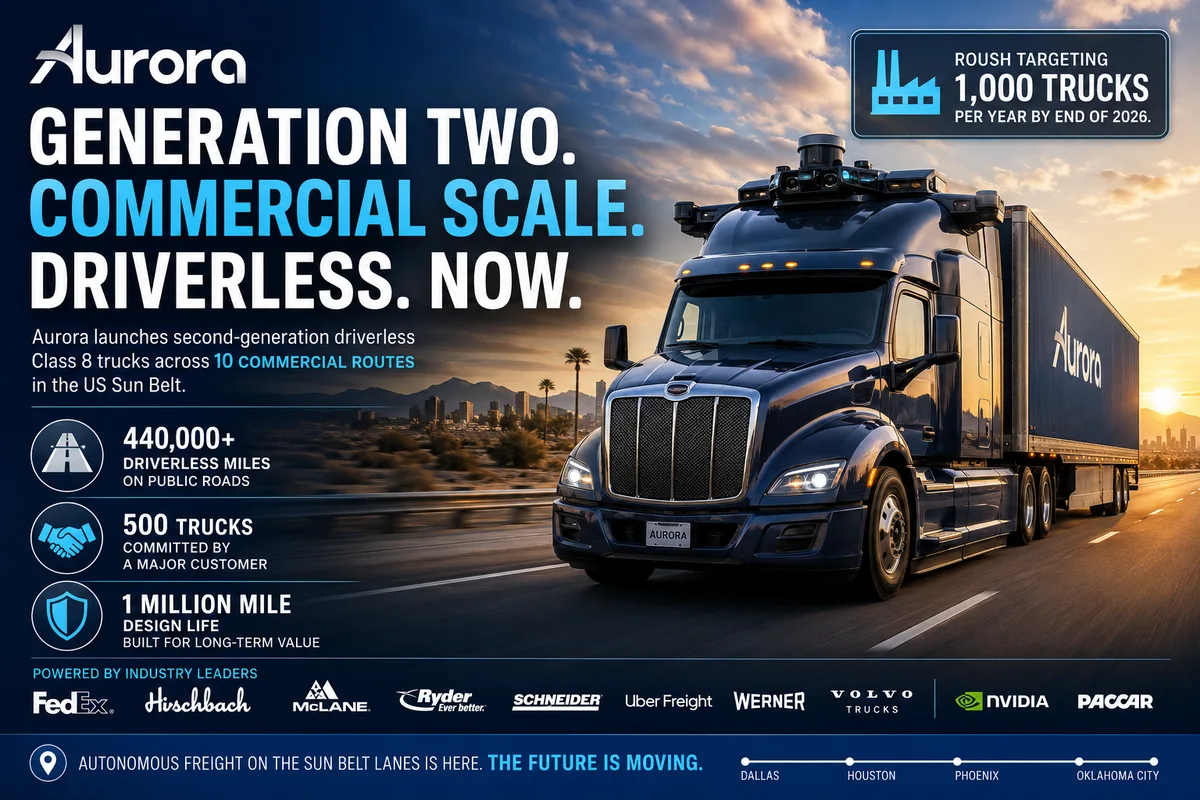
- Aurora Innovation launched its second-generation driverless Class 8 trucks across 10 US Sun Belt routes in July, with one customer ordering 500 vehicles.
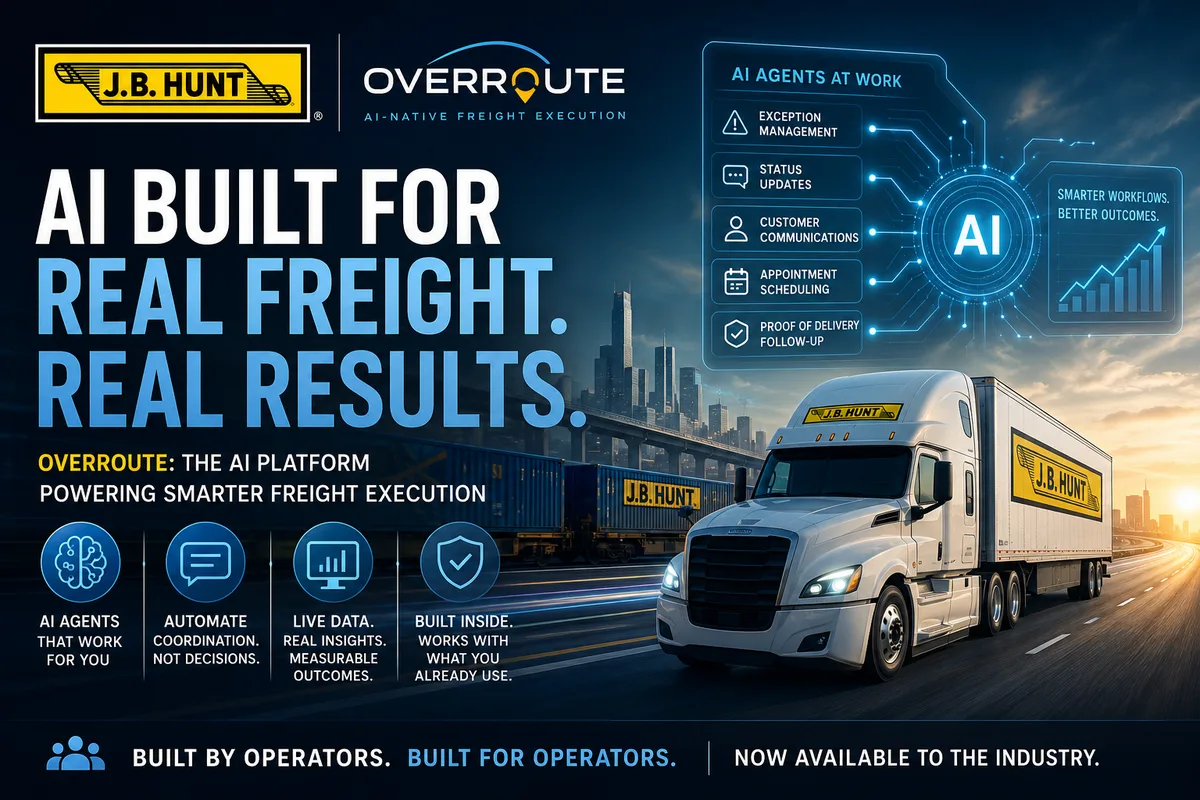
- J.B. Hunt's Overroute deployed AI agents across its entire freight network before going public in July, automating the coordination layer behind every load.
- Amazon and NVIDIA committed $1.4 billion to humanoid robotics for warehouse operations earlier this year.
What connects these stories is not just AI as a concept — it is physical AI in specific, high-volume, repetitive logistics tasks that have historically been done by humans: driving trucks, loading trailers, moving pallets. The common thread is that the tasks being automated are the ones that are most physically demanding, highest-turnover, and most difficult to staff consistently at scale. FedEx doesn't deploy trailer-loading robots because loading trailers is a bad job. It deploys them because finding, training, and retaining enough people to load tens of thousands of trailers a day, every day, at consistent quality, is one of its most persistent operational challenges.
What This Means for the Logistics Industry
- Physical AI is now in production at FedEx scale. This is not a warehouse startup deploying one robot in a controlled environment. It is FedEx — one of the largest logistics networks in the world — moving physical AI from pilot to production at a major hub, with explicit plans to scale further. That is the signal that separates "interesting technology" from "industry change."
- Trailer loading is the hardest warehouse task to automate — and it's being automated. If physical AI can handle trailer loading reliably at FedEx's Hagerstown Hub, it can handle most other warehouse automation tasks that have also resisted traditional robotics. The difficulty ceiling has been raised significantly by what Dexterity's Foresight model demonstrates.
- The workforce implications are specific and near-term. FedEx cited trailer loading as one of the top areas where team members seek support — framing automation as relief for a physically demanding job rather than replacement of workers. The reality is more complex: as the technology scales to additional hubs, the number of human trailer loaders required per hub will fall. For logistics operators managing large hourly workforces, the FedEx announcement is a signal to begin planning workforce transition strategies now, not after deployment reaches their facilities.
- Hub operations integration is the next frontier. FedEx's explicit focus on integrating the robot into destination planning, trailer assignment, and maintenance workflows signals that the value of physical AI in logistics is not just in the robot's ability to load trailers — it is in how the robot's capabilities change the entire hub's operational logic. That systems integration layer is where competitive advantage will be built in the next phase of logistics automation.
Key Takeaways — August 2, 2026
- FedEx expanded its collaboration with Dexterity by deploying autonomous trailer loading technology at its Hagerstown Hub in Maryland — announced July 30, 2026, with Container News reporting the expansion today August 2.
- The system combines Dexterity's Foresight physical AI platform with its dual-armed Mech robot, using vision, depth sensing, and touch to make real-time loading decisions.
- The Hagerstown deployment moves the program from pilot to production at a significantly larger operational scale — following years of joint development and validation at an earlier site.
- FedEx discussed its intent to scale trailer loading and unloading across several US hubs over the next few years at its 2026 Investor Day.
- Trailer loading has been one of the most automation-resistant tasks in logistics for decades — the Foresight physical AI model's ability to reason in real time across three spatial dimensions and time is what makes the current deployment possible.
- FedEx loads tens of thousands of trailers daily across its US network — the scale ambition behind the Hagerstown production deployment makes this one of the most significant physical AI deployments in logistics history.

Comments
No comments yet. Be the first to share your thoughts!