


Global air freight markets are entering their most critical window of the year with rates surging and capacity tightening sharply, as Black Friday and Cyber Monday e-commerce demand collides with a structural squeeze in freighter and belly-hold capacity. The combination is pushing air cargo rates to their highest levels of 2026 — and industry analysts warn the pressure is set to continue through the Christmas cut-off period in mid-December.
Capacity Squeeze — Not Demand Boom — Is Driving Rates
Data published by aviation consultant Aevean shows freighter capacity from Asia and the Middle East into Europe fell 15% year on year in the two weeks to November 24, 2026 — equivalent to approximately 27,500 tonnes of lost capacity. Maarten Wormer, head of consulting at Aevean, captured the mood in the industry with a pointed question: "Black Friday — or Red Friday?" noting that e-commerce gateways are taking the heaviest hit, while integrator and general cargo hubs are largely holding up.
According to Transport Intelligence's (Ti) Air Freight Rate Tracker, global headhaul air freight rates reached $3.92 per kg in early November — up 7.6% on October, 8.7% against the Q3 average, and a striking 45.2% higher year on year. The seven-week consecutive rise in rates — even as cargo volumes fell — underlines the structural nature of the squeeze: carriers hold the pricing power, and they are using it.
Meanwhile, Freightos reported that China-to-North America air rates climbed approximately 9% in a single week to around $7.76 per kg in early November — close to last year's seasonal peak. Trans-Pacific air freight rates are now running approximately 40% above the same period in 2025, according to market data.
Why Capacity Is So Tight
The capacity crunch has multiple drivers compounding each other simultaneously:
- Wide-body aircraft shortage — a persistent shortage of wide-body passenger jets is limiting belly-hold cargo capacity on key trans-Pacific and Asia-Europe corridors, with no relief expected before Q1 2027
- AI hardware demand — exports of AI chips, servers, and data-centre hardware from Taiwan, South Korea, and Southeast Asia are absorbing disproportionate shares of outbound air capacity on the lanes that matter most
- E-commerce surge — Black Friday and Cyber Monday promotional volumes are compressing the same freighter space that regular cargo depends on
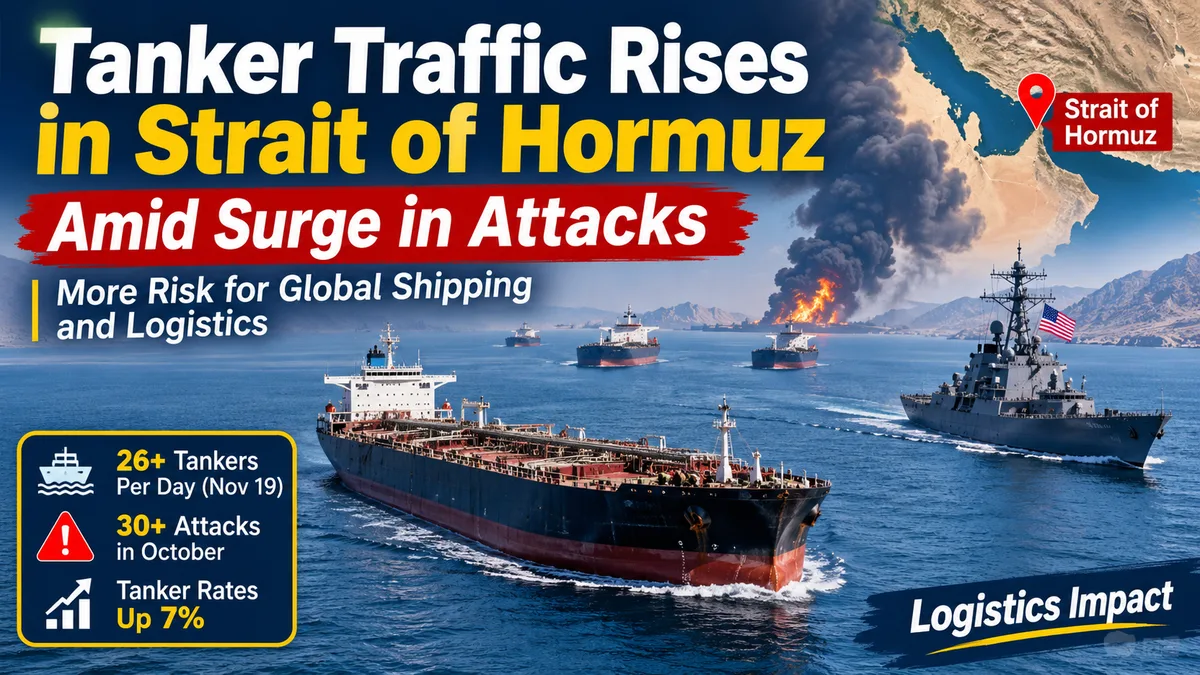
- Geopolitical rerouting — the ongoing Strait of Hormuz crisis has pushed more cargo onto air as an alternative to disrupted ocean routes, adding structural background demand pressure
- Winter schedule switchover — the airline industry's shift to winter schedules in late October reduced belly capacity on Europe-US and trans-Pacific corridors at the worst possible time
Trans-Pacific: Air Up, Ocean Easing
The divergence between air and ocean freight on the trans-Pacific is now stark. While air freight rates continue to climb, ocean freight markets are showing signs of easing demand — with carriers using blank sailings to manage capacity and support rates. Approximately 4.8% of total trans-Pacific TEU capacity was withdrawn in November, according to market data — 5.5% on the US West Coast and 3.4% on the East Coast.
C.H. Robinson noted in its November market update that Asia-origin air rates are expected to increase through November, particularly on trans-Pacific services, adding that the seasonal peak has developed more slowly than anticipated — meaning tightness is specific to certain origins and services rather than market-wide. Dimerco Express Group expects China-US air rates to ease slightly but remain elevated through December.
What to Expect Through December
The pressure is not over. Cyber Monday falls on December 1 this year — later than usual — giving shippers slightly more time to push holiday inventory, but leaving a tighter window between sale and Christmas delivery. Air freight industry analysts expect rates to "settle high rather than drop", with Christmas stocking demand and elevated fuel costs capable of lifting even quieter European lanes through mid-December.
For freight forwarders and shippers still moving air cargo in the coming weeks, the message is clear: capacity is the constraint, not demand. Block space agreements and early bookings are the only reliable protection against peak surcharges and space shortfalls as the market moves into the Christmas cut-off window.
🔑 Key Takeaways — November 28, 2026
- Freighter capacity into Europe down 15% YoY — 27,500 tonnes of lost capacity in two weeks to November 24. E-commerce gateways hit hardest.
- Global air headhaul rates at $3.92/kg — up 45.2% year on year, 7.6% above October, seventh consecutive weekly rise.
- China-US air rates near $7.76/kg — up approximately 9% in one week, 40% above last year's same period.
- Capacity squeeze is structural, not seasonal — wide-body aircraft shortage, AI hardware exports, Hormuz rerouting and winter schedule cuts all compounding simultaneously.
- Trans-Pacific ocean easing, air tightening — 4.8% of TEU capacity blanked in November while air rates climb.
- Cyber Monday on December 1 — later than usual this year, extending demand pressure but tightening the Christmas delivery window.
- Action required NOW — shippers and forwarders without confirmed block space agreements for December shipments face significant exposure to surcharges and capacity shortfalls.
Source date: November 27–28, 2026 | Published: November 28, 2026


Comments
No comments yet. Be the first to share your thoughts!