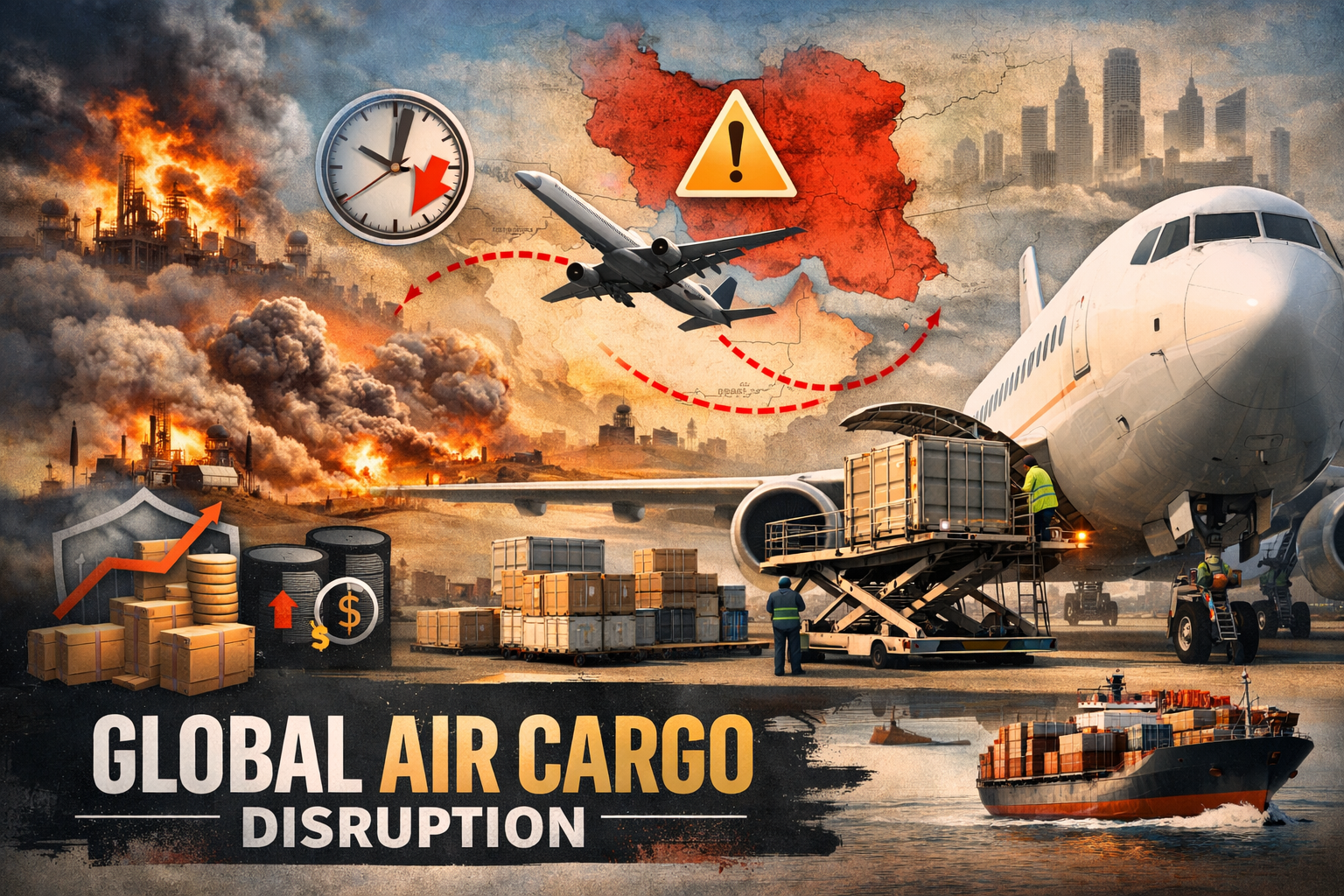
Global air cargo operations are facing fresh challenges as ongoing tensions in the Middle East continue to disrupt important air freight routes. Logistics companies, airlines, and supply chain operators are now dealing with restricted airspace, shipment delays, and rising transportation costs.
Air Cargo Recovery Slows Down
According to recent logistics industry reports, the latest escalation in the Middle East has negatively impacted the recovery of the global air cargo market. Several airlines have been forced to reroute flights to avoid high-risk zones, increasing flight times and operational expenses.
The disruption has affected both regional and international cargo movements, especially shipments traveling between Asia, Europe, and the Middle East. Freight forwarders are already reporting longer transit times and reduced cargo capacity on some routes.
Impact on Global Supply Chains
The air cargo sector plays a critical role in transporting high-value and time-sensitive goods, including electronics, medical supplies, automotive parts, and e-commerce shipments. Any disruption in air freight operations can quickly affect global supply chains.
Logistics companies are now adjusting their shipping strategies to manage the situation. Some businesses are shifting cargo to sea freight where possible, while others are accepting higher costs to maintain delivery schedules.
Rising Costs and Capacity Pressure
Rerouted flights consume more fuel and require additional operational planning, leading to increased shipping costs. Industry experts also warn that continued instability could tighten global air cargo capacity in the coming weeks.
At the same time, higher fuel prices and ongoing geopolitical uncertainty are adding further pressure on the logistics sector. Companies are being forced to focus more on supply chain resilience and risk management.
Industry Response
Freight forwarders and logistics providers are closely monitoring the situation and providing customers with updated transit schedules. Many companies are also strengthening contingency plans to reduce supply chain disruptions.
Industry analysts believe businesses should diversify transportation options and improve supply chain visibility to better manage future disruptions. Technology and real-time tracking tools are becoming increasingly important during uncertain market conditions.
Conclusion
The latest Middle East airspace disruptions highlight how quickly geopolitical events can impact the global logistics industry. As airlines and freight companies continue adjusting operations, businesses around the world may face higher transportation costs and slower delivery times.
For the logistics sector, flexibility, planning, and strong supply chain management will remain essential in navigating ongoing global uncertainties.


Comments
No comments yet. Be the first to share your thoughts!
Join the conversation
You need an account to comment on articles.