What Just Happened?
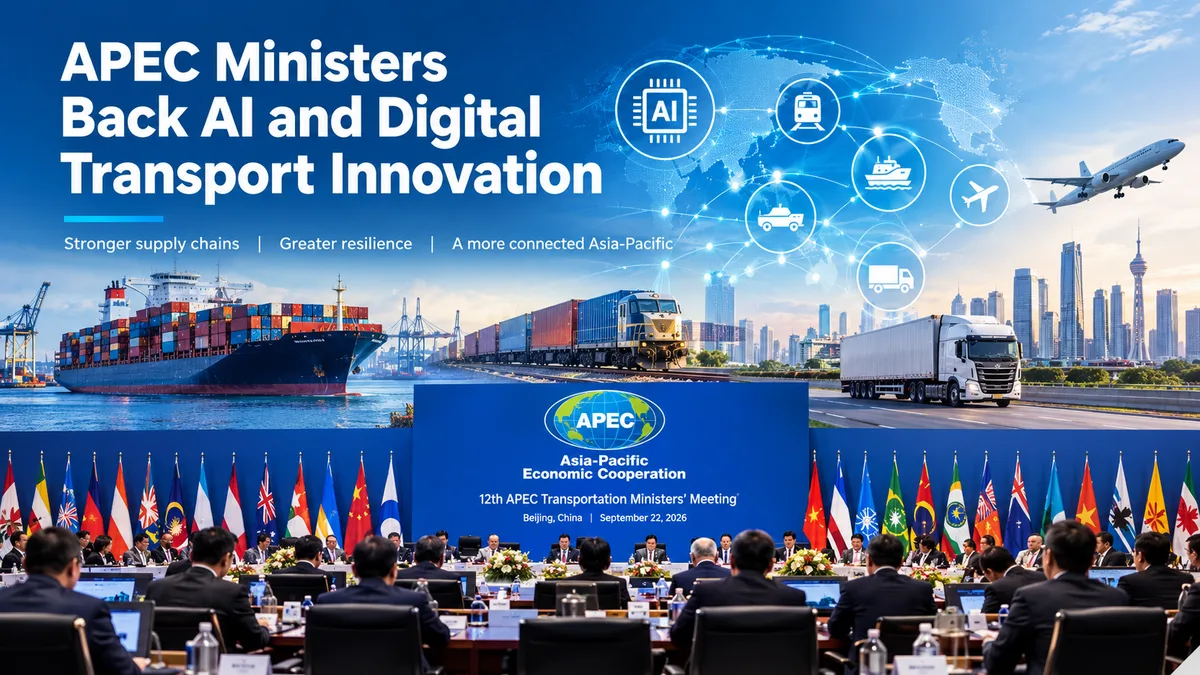
Transportation ministers and officials from across the Asia-Pacific gathered in Beijing on September 22, 2026, for the 12th APEC Transportation Ministers' Meeting — a gathering focused squarely on how digital technology and artificial intelligence can be used to keep goods and people moving as global trade grows more complex.
APEC ministers are advancing innovation across transportation systems to keep goods and people moving as trade grows more complex. The meeting, chaired by China's Minister of Transport Liu Wei, concluded with a joint statement expressing ministers' intent to advance innovation in the transport sector to strengthen supply chain resilience.
Why Is This Happening Now?
Liu Wei set the tone for the meeting, framing the urgency clearly: "In recent years, transportation connectivity across the Asia-Pacific has made significant progress, powerfully supporting smoother regional trade and deeper integration of industrial and supply chains, providing solid support for the region's economic growth."
But he also pointed to real strain in the system: "At present, with global economic recovery, weakened regional logistics and supply chains facing multiple challenges, deepening practical cooperation in Asia-Pacific transportation is of great significance for coordinating regional development efforts and enhancing the resilience of industrial and supply chains."
This urgency is backed by hard numbers on just how exposed global shipping remains to disruption. According to the meeting's own briefing materials, a single logistics chokepoint disruption can increase shipping costs by as much as 300 percent — a figure that will resonate strongly with anyone who has followed our recent coverage of the Strait of Hormuz crisis, Black Sea insurance zone expansion, or Panama Canal booking restrictions this year.
How Much Has Regional Transport Connectivity Actually Grown?
According to ongoing APEC Policy Support Unit research, the numbers show real progress over the past decade. Between 2015 and 2025:
- Rail networks across the Asia-Pacific grew by 9 percent
- Airport connectivity increased by 3.8 percent
- Maritime connectivity increased by 12 percent
This growth has strengthened trade and talent exchanges across the region — but ministers made clear that growth alone is not enough when the underlying network remains vulnerable to single points of failure.
What Are Ministers Actually Proposing?
The meeting's outcomes centered on several concrete themes:
1. Stronger Supply Chain Resilience Through Infrastructure Investment
Ministers called for stronger supply chain resilience by developing quality transportation infrastructure through increased financing and public-private partnerships. They also pointed to diversifying infrastructural links — such as expanding maritime and air routes — so that a disruption in one corridor does not cripple the entire regional trade network.
2. AI and Autonomous Technology Moving From Theory to Practice
Ministers highlighted how new technologies are modernizing transport systems, from intelligent traffic signals to autonomous electric public transport and predictive maintenance that can ease congestion, cut fuel costs and speed emergency responses.
Eduardo Pedrosa, Executive Director of the APEC Secretariat, captured the shift succinctly: "Digital technologies and intelligent transport systems have moved from prospect to operation. The question is no longer whether these technologies can be deployed but how their benefits can be realized more broadly across the region."
3. Inclusive Innovation — Reaching Rural Communities and Smaller Businesses
Ministers stressed that innovation must be secure and inclusive, with autonomous vehicles and digital logistics platforms offering ways to improve access for rural communities and connect smaller businesses to formal supply chains. This is a notable point: the AI and digitalization push is not framed purely as a tool for large multinational shippers, but as infrastructure that could bring smaller, previously disconnected businesses into regional and global trade networks.
4. Common Technical Standards Across Markets
Interoperability was another major focus, as ministers seek ways to advance mutual recognition of technical standards and closer coordination on data rules. For consumers and commuters, common standards could help ensure transport systems and vehicles are safe and reliable across different markets and conditions — meaning a digital logistics platform or autonomous vehicle system built to work in one APEC economy could function reliably when goods or vehicles cross into another.
The New Risk Being Discussed: Cybersecurity Across Connected Networks
As air, rail, road and maritime transportation become more connected, new risks emerge. Ministers pointed to cybersecurity threats that could ripple across entire networks, disrupting businesses well beyond a single point of failure — a clear acknowledgment that digitalization is a double-edged sword. The more interconnected and automated transport systems become, the more a single cyberattack could cascade across multiple transport modes simultaneously, rather than being contained to one isolated incident.
To address this, ministers noted the importance of more research on such challenges and enhancing connectivity through intermodal transportation, especially through the new APEC Expert Group on Transportation Research, which brings together experts across different forms of transport to study these cross-cutting risks.
What Does This Mean for the Logistics Industry?
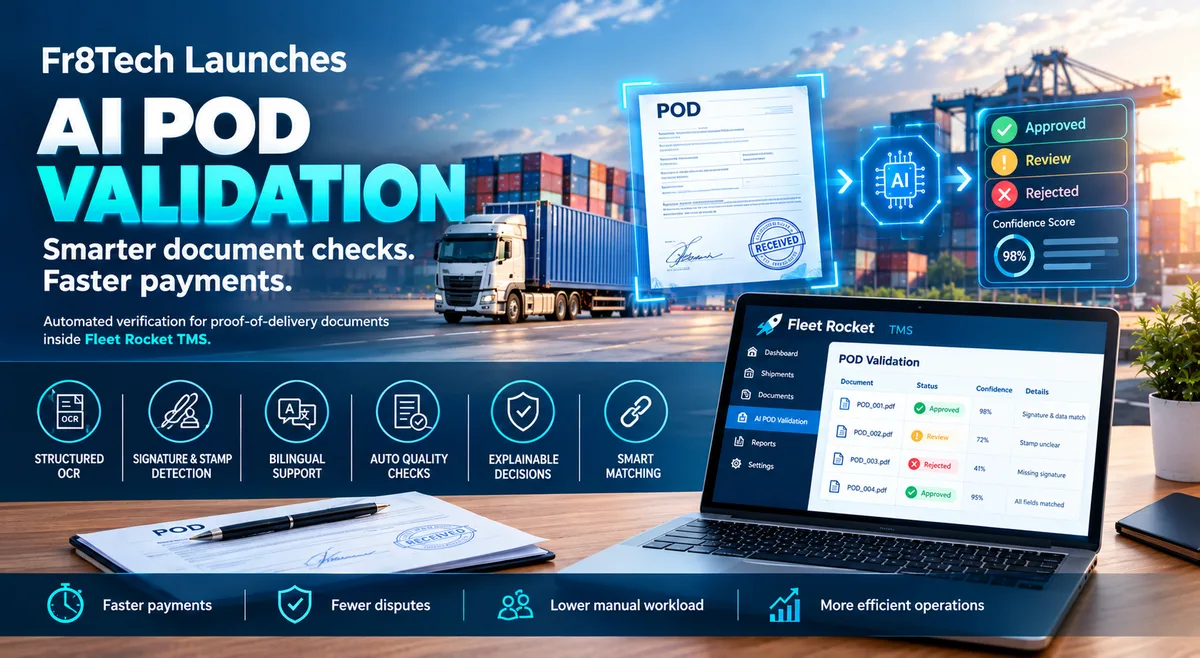
- Government-level backing for AI logistics tools is accelerating. With APEC transport ministers explicitly endorsing digital logistics platforms and predictive maintenance technology, freight companies investing in AI-driven tools — like the AI POD validation and AirRate.com platforms we have covered recently — are aligned with where regional policy is heading, not working against it.
- Chokepoint resilience is now a top-level policy priority. The explicit reference to 300% cost spikes from single chokepoint disruptions reflects exactly what we have documented this year across Hormuz, the Black Sea, and Panama Canal — and shows regional governments are treating this as a structural problem requiring coordinated infrastructure investment, not just a series of isolated crises.
- Cross-border technical standards may simplify future operations. If APEC economies succeed in aligning technical standards and data rules, freight forwarders and logistics tech providers operating across multiple Asia-Pacific markets could eventually face fewer country-by-country compliance hurdles for digital and autonomous systems.
- Cybersecurity investment will likely increase across the sector. With ministers flagging cross-network cyberattack risk as a formal agenda item, logistics companies — particularly those operating port, rail, or multimodal digital systems — should expect growing regulatory and customer attention to cybersecurity resilience in the years ahead.
- Smaller businesses and rural connectivity may see new market access. The explicit focus on connecting smaller businesses to formal supply chains through digital platforms signals potential new opportunities and support programs for SMEs in logistics and cross-border trade across APEC economies.
Key Takeaways — September 23, 2026
- The 12th APEC Transportation Ministers' Meeting concluded in Beijing on September 22, 2026, with a joint statement on transport innovation.
- Ministers highlighted that a single logistics chokepoint disruption can raise shipping costs by up to 300 percent.
- Asia-Pacific rail networks grew 9%, airport connectivity 3.8%, and maritime connectivity 12% between 2015 and 2025.
- Ministers called for increased infrastructure financing, public-private partnerships, and diversified maritime and air routes.
- AI, autonomous vehicles, and predictive maintenance were highlighted as tools to ease congestion and cut costs.
- A new focus on inclusive innovation aims to connect rural communities and smaller businesses to formal supply chains.
- Ministers pushed for mutual recognition of technical standards and closer coordination on data rules across economies.
- Cybersecurity was flagged as a growing risk as transport networks become more digitally interconnected.
- The new APEC Expert Group on Transportation Research will study these cross-modal risks and connectivity challenges going forward.
The message from Beijing this week is clear: for the Asia-Pacific region, AI and digital transformation in logistics are no longer optional upgrades — they are now viewed by regional policymakers as essential infrastructure for protecting supply chains from the kind of chokepoint shocks that have repeatedly disrupted global trade this year. For logistics companies operating across the region, this growing government-level alignment behind digital and AI tools is a signal worth watching closely.



Comments
No comments yet. Be the first to share your thoughts!